Newport News, VA · Garage Door Service
Portsmouth homes mostly went up around 1966 - original springs and rollers are common. We travel 18 miles from Newport News to fix them.
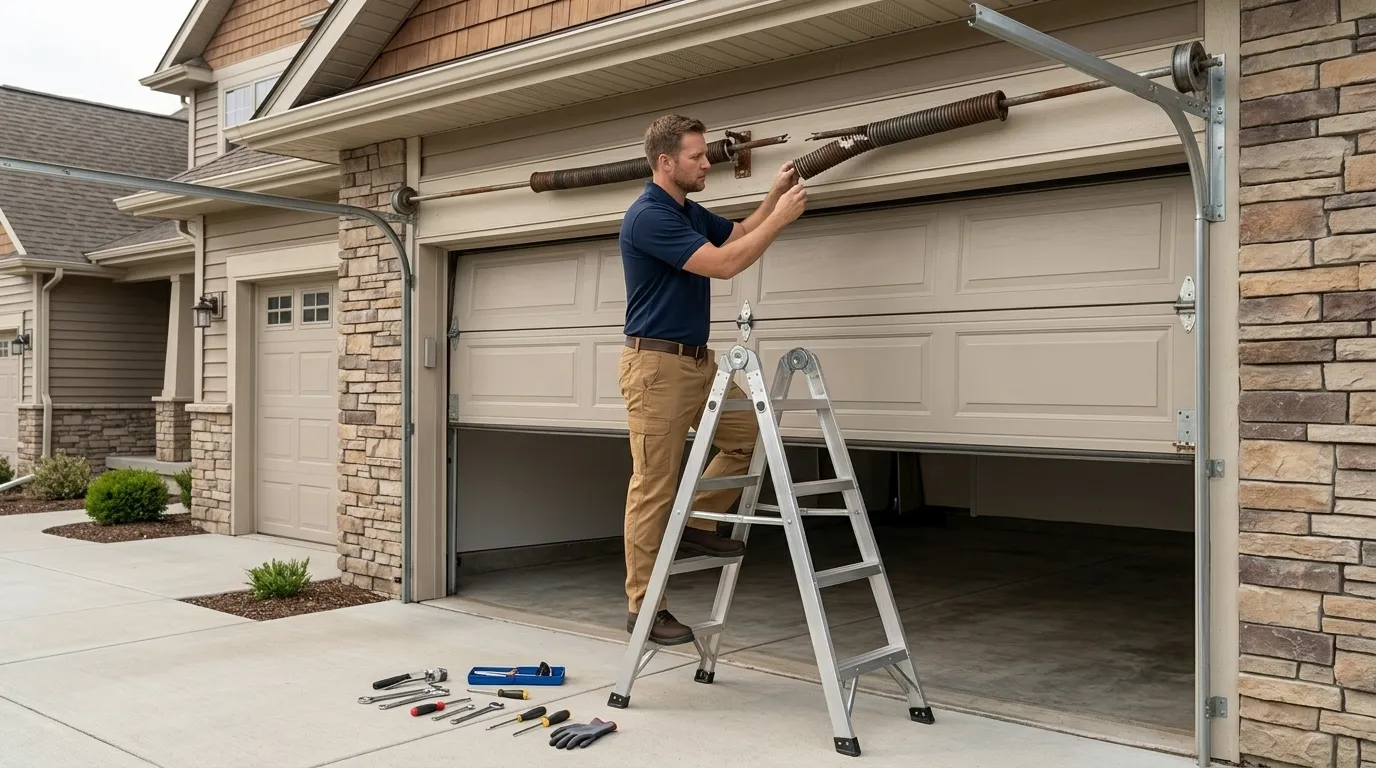
Portsmouth's housing stock centers on 1966, which puts a lot of these garage doors and their hardware at close to sixty years old. That matters for cost because a torsion spring or a set of rollers from that era usually isn't a drop-in replacement - the shaft diameter, the drum size, even the track gauge can be different from what's sold off the shelf today. A straightforward spring swap on newer hardware is one price; matching or adapting original 1960s hardware is another, and it's fair to expect the second job to run longer and cost more in parts time. Median household income in Portsmouth runs lower than the wider service area's $82,589 - we quote the job in front of you, not a regional average, and we tell you before we start if a repair is going to cost close to what a new door would run. That's not a sales pitch, it's just where the math lands on hardware this old. We travel from Newport News, about 18 miles out, so we bundle the diagnosis and the fix into one visit whenever the parts situation allows it - no separate estimate trip if we can help it.
The complication with a 1966-era door isn't usually the panel - it's what's attached to it. Torsion springs wound for hardware from that period were sized for older door weights and older drum styles, so a modern universal spring can end up mismatched if nobody checks the shaft first. Cable drums, end bearing plates, and even the track brackets on original installs sometimes used lag bolts and jamb hardware that's since been superseded. None of that is a Portsmouth-specific defect - it's just what happens when a door built in the mid-60s has never been fully replaced, only patched. Add the region's cold-moderate climate band, and steel hardware that's sat through decades of temperature swings tends to show corrosion at the spring coils and hinge pins before it shows anywhere visible. We check those points first on any older door, because a spring that looks fine on the outside can be one bad wind away from snapping under tension. The honest limitation here: if the opener or track hardware is original and a part has been discontinued outright, we'll tell you that on site rather than order a part that may take weeks to source.
We come out from Newport News, roughly 18 miles each way, so we schedule Portsmouth calls together with other stops on that side of the service area when we can - it keeps the visit efficient without making you wait longer than the job needs. When you call, tell us the door's rough age if you know it (1966 is close to typical for this area) and what it's doing - grinding, stuck halfway, won't close. That lets us bring the right spring size and cable gauge on the first trip instead of a second one. See the Portsmouth coverage page for what else we handle on this side of the river, and the main Newport News repair page if you're outside Portsmouth proper.
Don't touch a torsion spring under tension - that's the one place we draw a hard line, no matter how old or new the door is. A wound spring on a door this age can release with enough force to break a bone or worse, and the tools to do it safely aren't something most garages have sitting around. Where you can help yourself: check the track for visible rust or bent sections, listen for grinding at the rollers, and see whether the door is noticeably heavier to lift by hand than it used to be - that's often the tension going. If the opener motor runs but the door doesn't move, or moves an inch and stops, that's usually a cable or drum issue, not the motor, and it's worth mentioning that detail when you call so we bring the right part. Lubricating hinges and rollers with a light garage-door lubricant is safe DIY maintenance and can buy time on older hardware. Beyond that, on a door with original 1960s-era hardware, guessing at a fix usually costs more than calling in the first place.
The most common call we get out of Portsmouth is a door that's suddenly hard to lift by hand, or an opener that strains and reverses partway up. On hardware this old, that's almost always a spring losing its wind - not the opener failing, though the opener often takes the blame since it's the part making noise. A second common pattern is a cable that's frayed or slipped off a drum that's original to the door; you'll usually see the door hang crooked on one side when that happens. Less common but not rare: track brackets original to a 1966 install working loose from the jamb after decades of use, which shows up as a door that rattles or shifts off-track on the way down. None of these are emergencies that need a same-day fix in most cases, but a spring under full tension that's visibly gapped or twisted is one we tell people not to sit on.
Most housing in this part of Portsmouth dates to around 1966, and a lot of garage doors and their spring and cable hardware have never been fully replaced since. That means original torsion springs, drums, or track brackets are common finds, and they often need matching parts rather than a generic off-the-shelf swap.
No. We're based in Newport News and travel to Portsmouth, about 18 miles out, for repair calls. We don't keep a separate depot or crew stationed in Portsmouth, but we do combine service calls on that side of the area to keep visits efficient.
It depends on what's failed. A spring or cable swap on original 1966-era hardware is usually worth doing if the door itself is sound. If the track, drums, and springs all need replacing at once, or a part's been discontinued, we'll tell you straight when replacement makes more financial sense than another repair.
On older doors, a straining opener is usually a spring losing tension, not the motor itself going bad. The opener is doing more of the lifting than it's built for. We check spring tension first on any older door before touching the opener.
Call now or request a free quote - same-day service on most repairs, upfront written pricing.
