Newport News, VA · Garage Door Service
Portsmouth homes built around 1966 mostly still run on extension-spring hardware. We install new doors sized for that era, driving in from Newport News, 18 miles out.
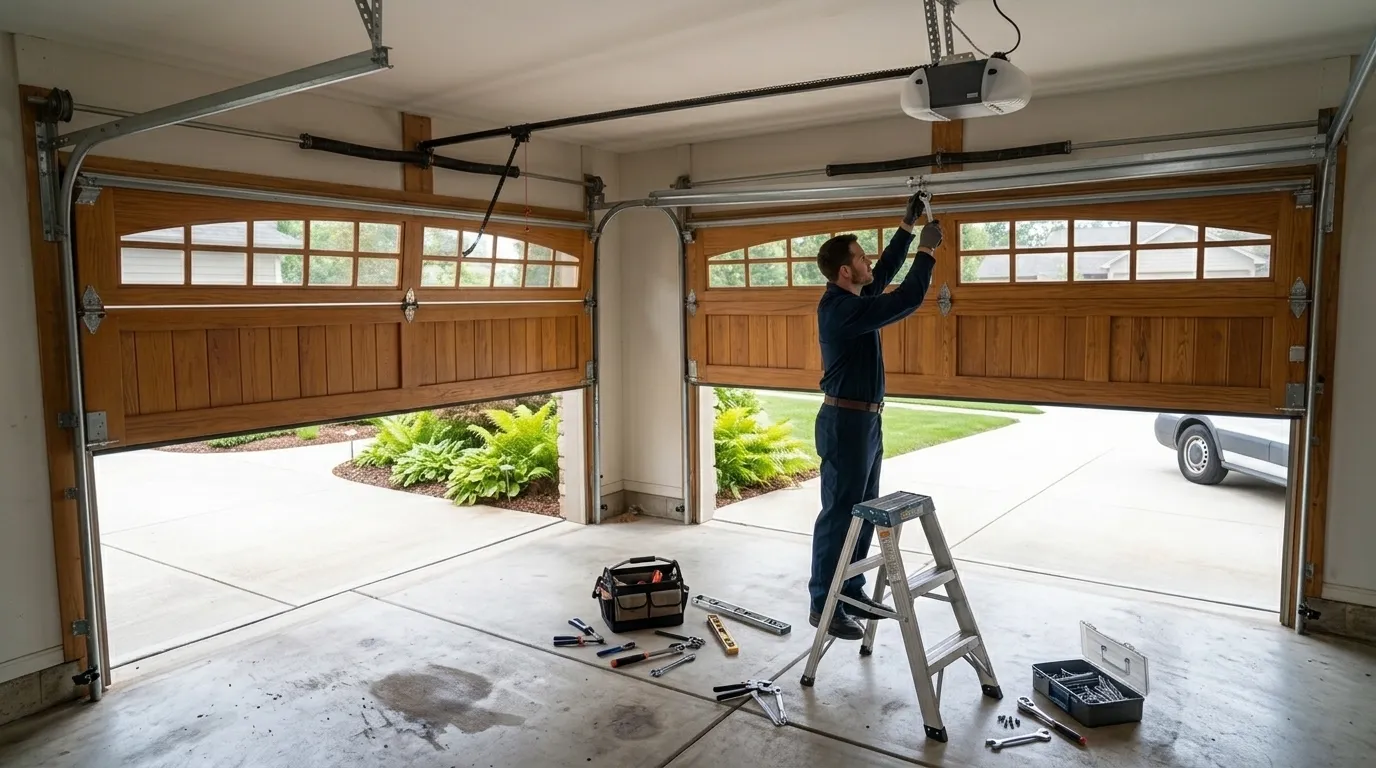
What a new door costs in Portsmouth has less to do with the town and more to do with what's already hanging in the opening. Most houses here went up around 1966, and that era means steel doors on extension springs, not the torsion setups that became standard later. Pulling that hardware out and squaring up an opening that's shifted a little over sixty years adds labor a straight swap wouldn't need.
Portsmouth's median household income sits at $58,972, noticeably under the $82,589 median across the wider area we cover. We don't set prices by zip code, but it does shape which doors we bring on the truck first. For most jobs here that means a mid-range steel door, insulated or not depending on what the homeowner wants to spend, rather than leading with the composite-wood options we'd pitch in a higher-income pocket of the service area.
We don't quote a number without seeing the opening. Track condition, whether the header needs reinforcing, and whether the old springs are torsion or extension all move the estimate, sometimes by a lot.
A door installed around 1966 usually came with extension springs mounted along the horizontal track, not a torsion bar over the header. That's the single biggest complication we run into in Portsmouth: swapping in a modern torsion-spring door means also changing how the door is braced, and sometimes reinforcing a header that was never built to carry that load.
Headroom is the other issue. Openers and torsion hardware from the last twenty years assume several inches of clearance above the door that a lot of these 1960s framing jobs didn't leave. On some jobs that means a low-headroom torsion kit; on others it means the new door sits slightly different than the old one did, and we say so before we start, not after.
We're working in a cold-moderate climate band here, which matters less for the door itself and more for what's behind it. A single-layer steel door with no insulation was normal for the period. Replacing it is often the first real chance a homeowner gets to close that gap, but it's a decision to make on purpose, not something we assume everyone wants.
We run out of Newport News, and Portsmouth is about 18 miles from the shop - one of the longer drives on our coverage map, not the shortest. That means we book installs here as a single trip: measure, order, and install, rather than splitting the job across two separate visits the way we might for a closer town.
We don't keep a branch or a storage yard in Portsmouth, so lead time on the door itself depends on what's in stock versus what needs ordering. If you need a specific size or an insulated panel that isn't a standard stock item, expect that to add a few days before we're back out to hang it.
Some parts of this job are within reach for a handy homeowner - pulling old weatherstripping, cleaning out a track, even swapping a broken roller. A full door swap on a house built around 1966 usually isn't, mainly because of the spring conversion. Extension springs under tension can put someone in the hospital if the cable slips off a pulley wrong, and torsion springs are worse if you don't have the winding bars and the experience to use them.
If your house still has the original extension-spring setup and you're just replacing the door panel itself with the same style of hardware, that's a smaller job and closer to doable. The moment you're changing spring type, header bracing, or opener mounting, call it in. It's not a job where a mistake costs you a weekend - it costs you fingers.
On a door this age, the tell is usually the springs, not the panels. If the door feels heavier than it used to, or it slams the last foot instead of settling, the extension springs have lost tension and the door is due for either new springs or a full replacement, depending on what else is worn.
Rust streaks at the bottom panel, a track that's pulled slightly away from the frame, or an opener straining on a door that used to lift easy - all common on a 1966-era setup that's never been upgraded. None of that means the whole door is junk. Sometimes it's a spring conversion and a tune-up. Sometimes the panels themselves have rusted through at the bottom and replacement is the only honest answer. We'll tell you which one you're looking at before we quote anything.
Usually, yes. Opening sizes from that era are close to today's standard sizes, so most jobs don't need framing changes. What does change is the spring type - extension to torsion - and sometimes the header needs a support plate added to carry the new hardware.
No. We work out of Newport News and bring doors out to Portsmouth as needed. Standard sizes are usually quick to source; specific insulated panels or nonstandard widths can add a few days to the order before installation.
Depends on the garage. If it's attached and heated space sits above or beside it, insulation makes a real difference in a cold-moderate climate like ours. If it's a detached garage you don't heat, a single-layer steel door is often the more practical choice.
Call now or request a free quote - same-day service on most repairs, upfront written pricing.
