Newport News, VA · Garage Door Service
Smithfield's housing dates to 1992, newer than most of the area, and $110,182 median income shifts the repair-or-replace call. We drive in from Newport News.
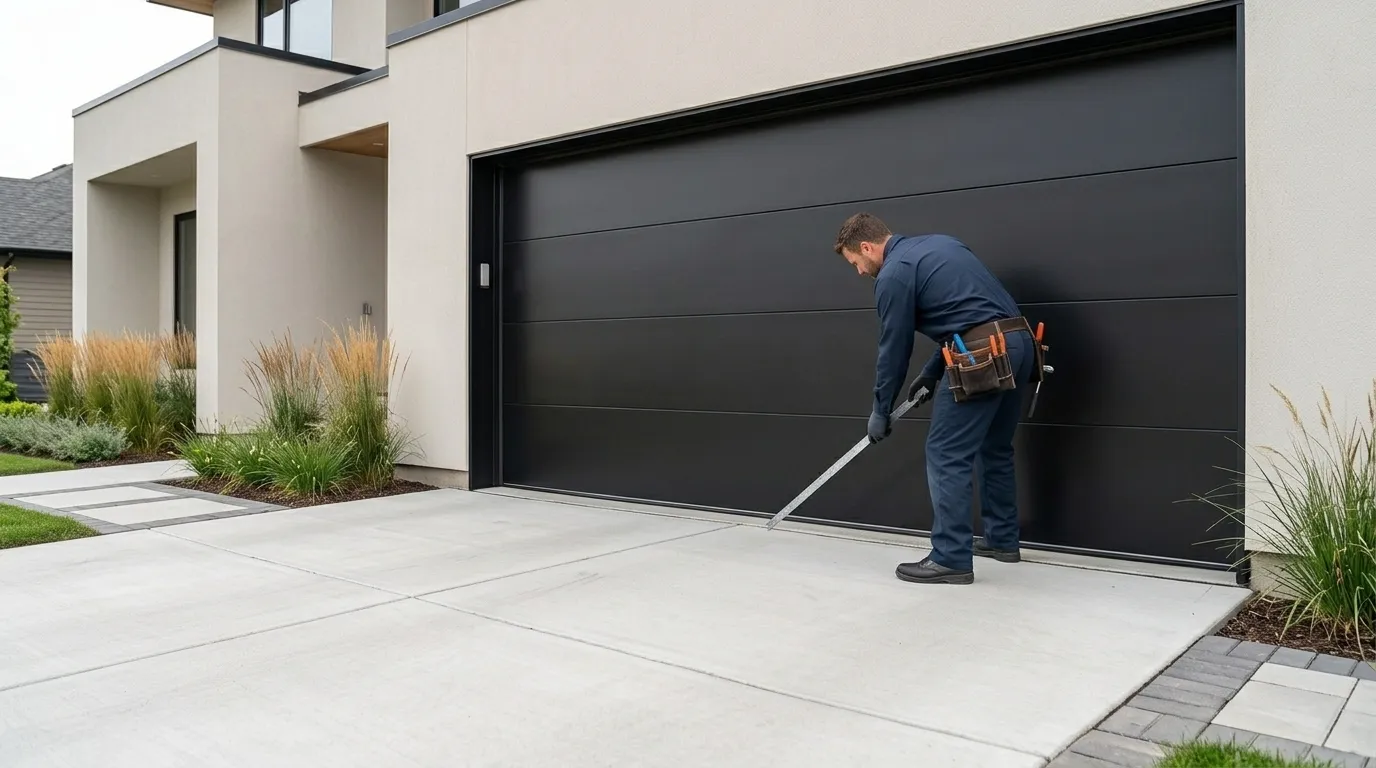
Start with the money, because it changes the advice we give. Smithfield's median household income runs $110,182, well above the $82,589 median across the rest of the service area. That matters because the repair-or-replace line moves with what a household can absorb. In lower-income pockets, we patch a spring or swap a roller and call it done for another five years. In Smithfield, when a door is already old and something major goes on it, more owners take the replacement instead of nursing a worn unit along.
The hardware itself is a separate issue from the money. Smithfield's homes carry a median build year of 1992, noticeably newer than the 1977 median across the wider service area, where most houses went up in the 1960s and 70s. A door installed around 1992 is a steel sectional door on a torsion spring, not the older heavy one-piece slab doors still common in the older neighborhoods we cover. That's a different animal to diagnose: different spring wind counts, different track gauge, different failure points.
Add the climate. This is a cold-moderate band, and steel track and spring coatings take a beating from repeated freeze-thaw cycling over three decades. A 1992 door isn't ancient, but it's at the age where the original spring is near or past its rated cycle life, and the galvanizing on an original track has usually started to go.
Some of it, yes. You can lubricate rollers and hinges, tighten loose bolts on the track brackets, and clear the photo-eye lenses if the door won't close. Those are five-minute jobs and they solve a fair number of the calls we don't need to make.
What you shouldn't touch is the torsion spring itself. It's wound under enough tension to break a bone or worse if the winding bars slip, and a door built in the early 90s is old enough now that the spring is a reasonable suspect any time the door feels heavy or won't stay open. Opener logic boards are the other no-go zone - modern circuit boards fail in ways that look like a dead motor but aren't, and guessing wrong means paying for a motor you didn't need.
Our honest limitation here: we don't stock every obsolete opener board on the truck, and if your unit is an older model with a board that's been discontinued, we may be looking at a full opener swap rather than a repair, simply because the part isn't made anymore.
For a torsion spring failure, the job is straightforward but not quick. We measure the door's weight and the drum size, order or pull a matched spring pair off the truck, and wind it to the correct number of turns for that specific door - guessing the wind count is how doors end up crooked or springs snap again within a year.
Track work on a 1992-era door usually means checking for the slight bow or rust pitting that thirty years of freeze-thaw puts into galvanized steel, then shimming or replacing the section rather than the whole track if the rest is sound. Opener calibration is its own step: force settings, travel limits, and safety reversal all get checked and reset, since a door that's had a spring replaced needs the opener recalibrated to the new balance point or it'll fight the motor.
We don't push a full teardown when a targeted fix will hold. If the door is original to a 1992 build and everything but the spring is sound, we replace the spring and leave the rest alone.
The truck carries springs, rollers, and cable sized for the standard steel sectional doors that went into most of the service area's build-out through the 1970s, 80s, and into the early 90s - which covers the bulk of what we run into in Smithfield. Standard torsion springs, nylon and steel rollers, galvanized cable, and the common photo-eye sensor kits are all on hand for a same-visit fix in most cases.
What we don't carry stock for are custom architectural doors or opener boards for discontinued models - those get special-ordered, and lead time depends on the manufacturer, not on us. If your door is an unusual size or an older opener with a proprietary board, expect a second trip once the part's in.
The call we get most from this side of the service area is a door that starts up fine, gets partway, then reverses on its own or drops back down. On a door built around the early 90s, that's almost always the torsion spring giving out - the opener's safety reversal senses the extra strain of a spring that's lost tension and kicks the door back down rather than force it. It can look like an opener problem, but the opener is usually just reacting correctly to a spring that's done.
A second common version is a door that feels noticeably heavier lifting by hand than it used to. Same cause, earlier stage - the spring is weakening but hasn't fully let go yet. Either way, it's worth a call before the spring snaps outright, since a spring that breaks mid-cycle can drop the door hard and take the cables or a track bracket with it.
If your home was built around the early 1990s median for this area, the original spring is likely at or past its typical service life. Symptoms like a door reversing mid-cycle or feeling heavy to lift by hand point to spring fatigue, not just an adjustment. We check the wind and tension on site before recommending a full replacement.
No. We run out of Newport News and drive the roughly 9 miles in for every Smithfield call. There's no local depot, so parts availability depends on what's already stocked on the truck for that day's route.
It depends on what else is wrong beyond the spring. With Smithfield's higher median income relative to the rest of the service area, we see more owners choose full replacement once a door needs more than one system fixed - but if it's just the spring and the rest is sound, repair is usually the right call.
Call now or request a free quote - same-day service on most repairs, upfront written pricing.
