Newport News, VA · Garage Door Service
Smithfield's housing stock runs newer than the rest of our coverage area, median build 1992 vs 1977, which changes which doors and hardware options fit here.
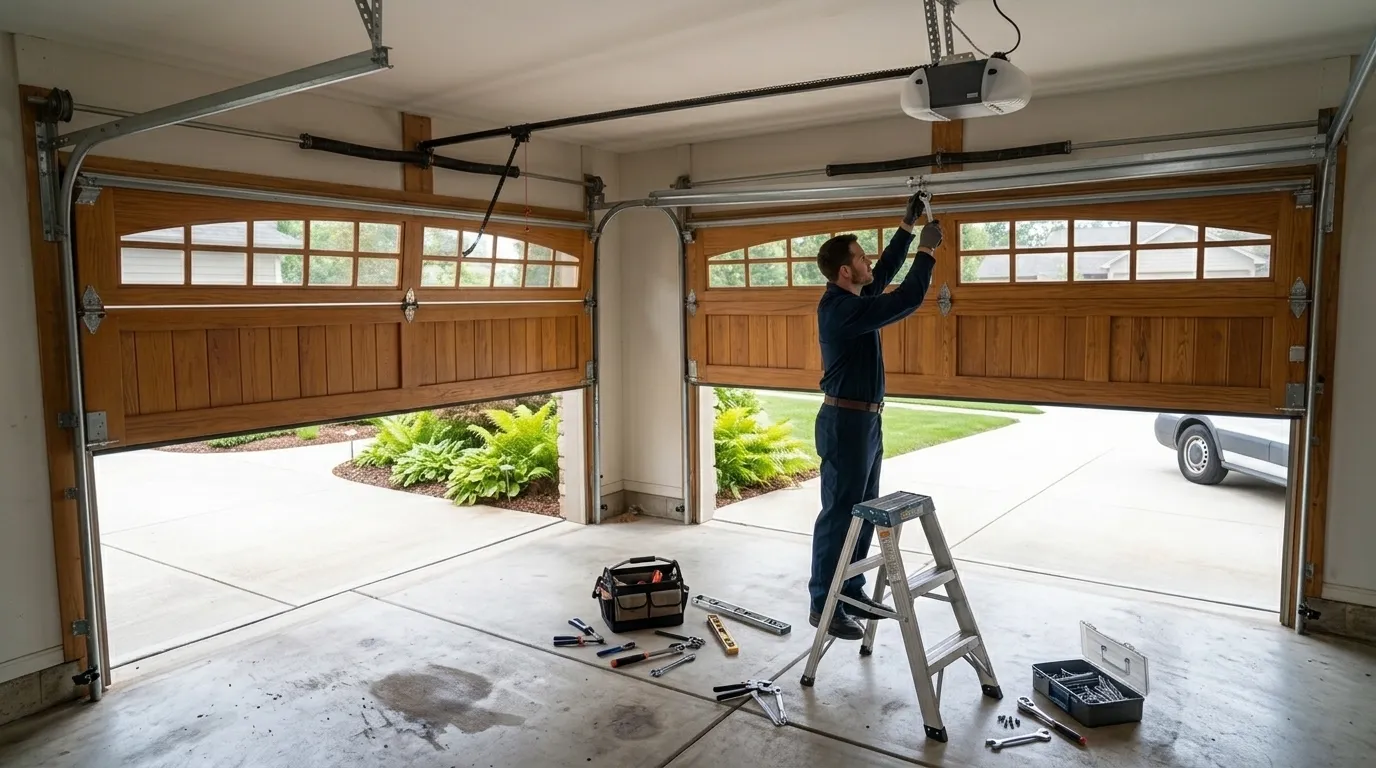
Most of our coverage area was built out between 1948 and 1992, with the median landing around 1977 - a lot of that stock is older, odd-sized, and full of retrofit hardware. Smithfield sits on the other end of that range. The median home here went up around 1992, which puts most houses on standard, code-era framing with door openings built for factory sectional doors rather than the older one-piece slabs you find closer to the city.
That sounds simpler, and mostly it is. But 1992 was over thirty years ago, which means the openers and springs that shipped with these houses are at or past the end of their service life even though the doors themselves look fine. Add the cold-moderate climate band this area sits in, and insulation matters for a new install in a way it didn't when these doors were first hung - builder-grade panels from that era weren't spec'd for the R-values homeowners expect now. The complication isn't finding a door that fits the opening. It's matching a new insulated door and correctly sized torsion spring to a frame that was never built with today's heavier panels in mind.
A torsion spring holds enough stored force to break bones or worse, and that doesn't change based on how new the house is. If you're swapping a garage door yourself, the spring, cable, and drum work is the part to hand off even if you're comfortable with the rest.
On a house from this area's 1992-median building wave, the door itself is usually a standard factory size, which makes the ordering part easier than it would be on an older, non-standard frame. That's the good news. The bad news is that insulated sectional doors weigh more than the hollow single-layer panels a lot of homeowners are replacing, and an opener sized for the old door won't necessarily handle the new one safely. If you want to swap the door slab yourself and have a licensed tech handle the spring conversion and opener match, say so up front - that split job is common and reasonable. Full solo installs on anything with a torsion system are not something we'd recommend, regardless of how new the house is.
We start by confirming opening size and header clearance, then measure the existing spring wire size and drum against the new door's weight - on a 1992-era frame this is usually a known standard, not a guessing game. The old door comes out in sections, track brackets get checked for square since thirty years of seasonal swelling can rack a jamb slightly even on newer construction.
The new door goes up section by section, with weatherstripping and the bottom astragal set before the torsion spring gets wound to the new door's actual weight, not the old one's. Rollers, hinges, and center struts get matched to the panel style rather than reused, since mixing old hardware with a new door is where a lot of premature failures start. Once the door's hung and balanced, the opener gets mounted or reconnected, force and travel limits get set, and the safety sensors get aimed and tested before we call it done. On an insulated door, we also check that the bottom seal is compressing evenly along the full width, since that's the seal doing the actual insulating work.
Because Smithfield's housing wave leans toward standard 1990s-era openings rather than the older, odd-width frames you find in the 1948-to-1970s stock elsewhere in the service area, the doors and torsion springs that fit most jobs here are the sizes we carry on the truck as a matter of course. That keeps a straightforward door swap a one-visit job more often than not.
Where we run into a wait is custom widths, unusual finishes, and higher-end insulated glass-panel doors that get special-ordered from the manufacturer - those aren't something any local company keeps on a shelf, and we won't pretend otherwise. If a homeowner wants a specific look rather than a standard steel or insulated composite door, we'll quote the lead time honestly rather than promise same-week installs we can't back up. We travel from Newport News, about nine miles out, so there's no local yard to swing back to mid-job - what's sized and quoted ahead of time is what shows up on the truck.
The complaint we hear most from this part of the coverage area isn't a door that won't open - it's an opener straining, grinding, or reversing partway up on a door that still looks structurally fine. That tracks with a 1992-median building wave: the door slab has held up, but the opener motor and the spring tension behind it are closing in on thirty years of daily cycles, and the motor is working harder to lift a spring that's lost tension over time.
Some owners also notice the door itself feels colder to the touch than the rest of the garage wall, or that the bottom seal doesn't sit flush anymore - a sign the original panel wasn't insulated to begin with, which was common for the era even in higher-income build-outs. Neither symptom means the opener or the door is unsalvageable on its own, but when both show up together, it's usually cheaper over time to replace the door and opener as a pair than to keep patching a thirty-year-old pairing one part at a time.
Most are. With a median build year around 1992, the majority of homes here have factory-standard sectional door openings, which usually means we can install off standard stock sizes rather than special-ordering a custom width. We'll still measure on site since individual houses vary.
Usually yes on weight and insulation. Doors from that era were often single-layer and uninsulated even on newer construction, so a new door will typically weigh more, which means the torsion spring and possibly the opener get upgraded to match rather than reused from the old setup.
About nine miles. We work from Newport News, so there's no local branch to run back to mid-job - anything unusual about the door or opener gets confirmed and quoted before the truck rolls, which keeps the visit to one trip for standard installs.
Sometimes, but not always. If the new door is heavier or larger than the one it's replacing, an older opener may not have the lift capacity or the travel range to run it safely. We check the opener's rating against the new door's weight before deciding whether it carries over.
Call now or request a free quote - same-day service on most repairs, upfront written pricing.
