Newport News, VA · Garage Door Service
Smithfield homes built near 1992 still run original rollers and track brackets. We drive out from Newport News to reset doors that have jumped the track.
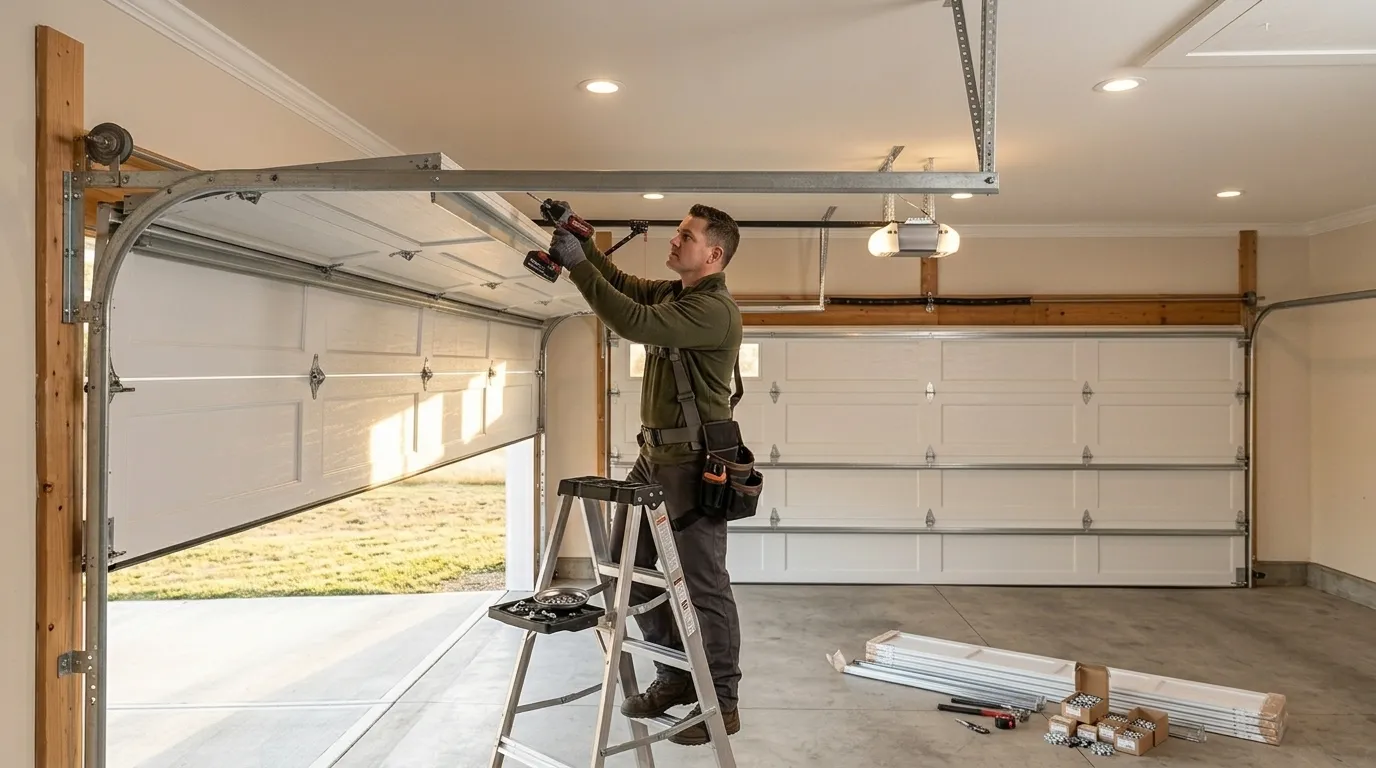
Smithfield sits at the newer end of the housing stock we work across the region - most of the area we cover went up between 1948 and 1992, but Smithfield itself skews toward that later date, with a lot of homes built right around 1992. That matters for an off-track door because it means the original steel track, the original roller brackets, and often the original rollers are still doing their job thirty-plus years later. Nobody's replaced them because nothing's failed yet - until it does. When a door that old jumps the track, the cause is rarely a single dramatic event. It's a bracket that's worked itself loose a fraction of an inch at a time, a roller that's worn oval instead of round, or a cable that's stretched just enough to let the door ride crooked on one side. On a newer build in this price range, we also see doors that were sized right for the opening but hung with lighter-duty track than a heavier insulated panel needs - fine for years, until age and use catch up with the hardware. The complication with a 1992-era door is that the track gauge and bracket spacing from that period aren't always what's sold off the shelf today, so a repair sometimes means adapting current stock to older mounting points rather than a straight swap.
You can rehang a door that's popped off the track in some cases - if it's still sitting in the opening, closed, and not under spring tension, a careful person can sometimes walk the rollers back into the channel. What you should not do is force it. If the door is racked at an angle, if a cable is slack or snapped, or if you hear the door creak under load when you nudge it, stop. Torsion and extension springs on a door built around 1992 have had three decades to fatigue, and a spring that lets go while someone's hands are near the track can put a rod through a windshield or a hand. There's also a real chance the off-track condition is a symptom of something upstream - a bent track section pulling the rollers sideways every time the door cycles - and forcing the door back on without fixing that will just send it off again, often worse. If the door won't move freely by hand with the opener disconnected, that's the line where a homeowner should call rather than keep pushing.
First step is getting the door off tension safely, then checking the track itself - is it bent, or is it straight but pulled out of alignment because a bracket backed out of the framing. On a lot of the doors we see from the early-90s build era in this area, the fix is bracket reinforcement plus roller replacement, since the original nylon or steel rollers have worn enough to ride loose in the channel even after the track is squared up. We check both cables and both springs while we're in there, because a door that's been running crooked puts uneven load on both sides, and it's common for one cable to be stretched more than the other. Once the track is reset and true, we run the door through a full open-close cycle by hand before touching the opener, checking that it tracks straight under its own weight. Only after that do we reconnect the opener and test it under power. If the panel itself is bent from riding off-track, that's a separate conversation - sometimes it's a panel swap, sometimes the whole door's earned a replacement, and we'll say so plainly rather than patch something that'll fail again in a season.
We carry standard-gauge track sections, steel and nylon rollers, and cable in the sizes that fit most doors from the 1970s through today, which covers the bulk of what we run into working this area. Where it gets slower is hardware specific to certain builder-grade doors from the early 90s - some brackets and track profiles from that window were never standardized the way current stock is, and matching them can mean sourcing a part rather than pulling it off the truck same day. We'll tell you up front if that's the situation rather than let it surprise you at the end of the job.
The giveaway is usually visible before the door fully jumps - a gap opening up between the roller and the track on one side, the door leaning noticeably as it travels, or a grinding sound low down near the bottom panel as a roller rides the edge of the channel instead of sitting inside it. Sometimes it's quieter: the door just starts closing a half-inch off level, catching on the weatherstrip on one side. Given how much of Smithfield's housing dates to right around 1992, this is one of the more common calls we get from the area - hardware from that era is old enough to fatigue but not so old that most owners have thought to replace it yet. We drive out from Newport News, about 9 miles, to look at it.
Treat it as unsafe. A door running off track puts uneven strain on cables and springs even if it still opens and closes. Stop using the opener, don't force it by hand past resistance, and get it looked at before a cable snaps or a spring lets go under load.
A lot of homes here were built around 1992, and much of that original track, bracket, and roller hardware is still in place. Thirty-plus years of cycling wears rollers oval and lets brackets creep loose, so an off-track door is a common symptom on houses from that era.
We stock standard track, rollers, and cable that fit most doors from the 1970s onward. Some early-90s builder-grade hardware used brackets or profiles that aren't common stock today, and matching those sometimes takes longer than a same-day fix.
We're based in Newport News, about 9 miles from Smithfield, and drive out for calls like this. We don't keep a branch or depot in Smithfield itself.
Call now or request a free quote - same-day service on most repairs, upfront written pricing.
