Newport News, VA · Garage Door Service
Spring repair for Smithfield homes, most built in the 1990s. We run the 9-mile drive from Newport News with torsion springs sized for newer double doors on hand.
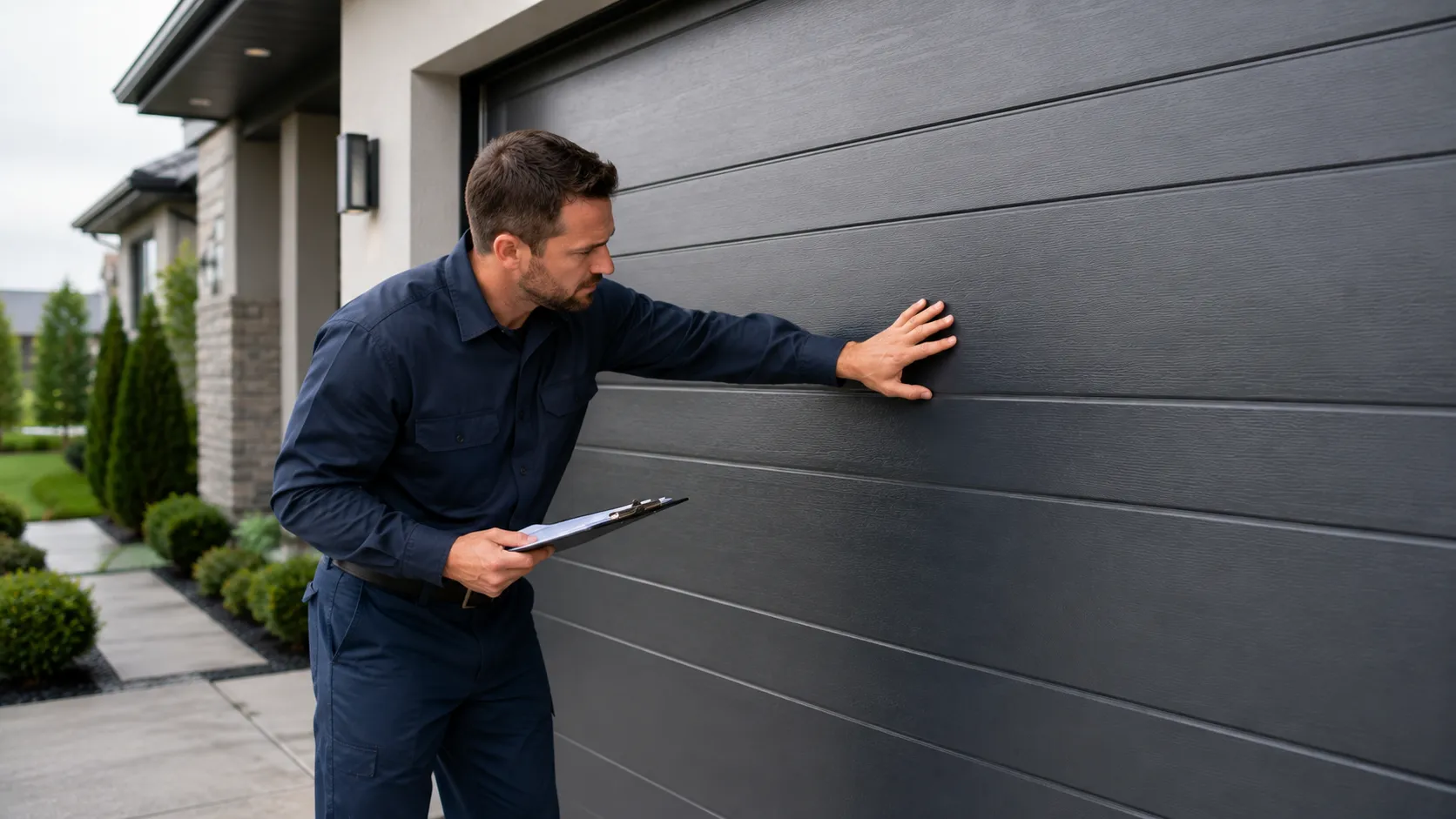
The drive out to Smithfield is nine miles from our Newport News base, which is enough distance that we build the trip around what the door actually needs, not a guess. We ask what you hear, what the door does when it lets go, and whether it's a single door or a double, before the truck leaves. That's not us being slow - it's us making sure the spring on the shelf matches what's likely hanging in your garage.
Smithfield is a different animal than a lot of what we cover close to home. The median house here went up around 1992, a full generation newer than the 1977 median across the rest of the service area. That gap matters more than it sounds. Houses built in the early '90s came standard with torsion springs on a center shaft rather than the side-mounted extension springs common in older stock. Torsion setups are safer to work on with the right bars, but they're also wound tighter and the failure is more sudden - a full snap instead of a slow stretch and sag.
With household income here running higher than the surrounding area, we also see more double-wide doors and heavier insulated panels, which means the torsion springs doing the lifting are wound to a higher cycle count. That's one more reason we confirm door width and panel type on the phone before we load the van.
A broken torsion spring is not a bathroom-faucet repair. The spring is wound under enough tension to break a bone or worse if the winding bars slip, and on a door this newer, that tension is set higher than it would be on an older, lighter extension-spring door. If you're looking at a snapped spring on a Smithfield garage built in the last thirty years, the safe move is to leave the door down, unplug the opener so nobody tries to run it, and make the call.
What you can do yourself: check whether it's one spring or two. Most doors built in this era run two torsion springs on a shared shaft. If only one broke, the door may still look like it's working, just heavier and crooked when it moves - that's a sign the second spring is about to go too, not a sign you dodged the problem.
We won't pretend there's nothing here for a handy homeowner. Lubricating hinges and rollers, tightening a loose bracket, clearing a track - that's reasonable weekend work. The spring itself isn't. We turn down calls to walk someone through winding a torsion spring over the phone, because it's the one job where a mistake doesn't mean a redo, it means an ER visit.
On a torsion setup like most Smithfield doors have, the job starts with securing the door in the open position so the cable drum and shaft can't drop while we work. We back off the old spring with winding bars, pull the broken sections off the shaft, and check the shaft itself, the bearing plates, and the cable drums for wear before anything new goes on - a broken spring that's been dragging metal-on-metal for a few days sometimes takes a bearing with it.
We size the replacement to the door's actual weight, not a generic chart, because the heavier insulated double doors common in this area's income bracket need a different wind than a lighter single. Once the new spring is on and wound to the correct number of turns, we balance the door: lift it by hand to waist height and it should hold, not drift up or slam down. If it doesn't hold there, the spring isn't done being adjusted.
Last step is running the opener through a full cycle and watching the cable tension on both sides. A door that's off-balance by even a quarter turn on the spring will wear the opener's motor and gears faster than it should.
Because Smithfield's housing runs newer than most of what we cover, the torsion springs sized for standard 7-foot and 8-foot double doors built from the 1990s onward are what we carry as a matter of course, along with the matching cable drums and bearing plates. Where we run into a delay is the older extension-spring hardware you'd find on a house built well before 1992 - that stock is thinner because there's less of that housing type in this part of the service area, so if a Smithfield job turns out to be one of the exceptions, we may need a day to get the exact part.
We also keep steel shafts and standard-lift cable in truck stock, since those go with almost every torsion spring job. What we don't stock on the truck is custom-length shafts for oversized or unusually tall doors - those get ordered once we've measured the opening in person, and that's the one honest lead-time gap in this list.
The clearest sign is a door that won't budge, or that the opener strains and reverses instead of lifting - that's the motor trying to do a spring's job and failing. A visible gap in the coil above the door, or a spring that's split into two separate pieces on the shaft, means it's already broken and the door is running on the opener alone, which it isn't built to do for long.
A second sign, more common on the two-spring setups typical of newer Smithfield doors: the door looks fine sitting closed but drifts down slowly or tilts to one side when it opens. That usually means one spring broke while the other is still holding, and the door is being lifted unevenly. It'll still open for a while. It's still a broken-spring call, and it's worth making before the second spring gives out under the full load.
It's nine miles each way, so we confirm the door type, size, and symptom on the phone first. Smithfield's newer housing stock means torsion springs are the norm here, which lets us bring the right spring instead of guessing between torsion and extension hardware.
Yes. The median home here was built around 1992, versus 1977 across the wider area, so most Smithfield garages came with torsion springs on a center shaft rather than the older side-mounted extension springs, and often with heavier insulated double doors.
If the door still opens on the opener, technically yes, but it's not lifting the way it's designed to. On a two-spring setup the second spring is now carrying weight it wasn't built for alone, and it can go next. We'd rather schedule the fix than get the call after both fail.
For the standard torsion springs on 1990s-and-newer double doors, common in Smithfield, yes, that's regular truck stock. Older extension-spring hardware from pre-1992 homes is less common here, so that occasionally needs an extra day to source.
Call now or request a free quote - same-day service on most repairs, upfront written pricing.
