Newport News, VA · Garage Door Service
Garage door repair and replacement in Yorktown, VA, where most homes date to 1967 - original torsion hardware and springs that have never been swapped.
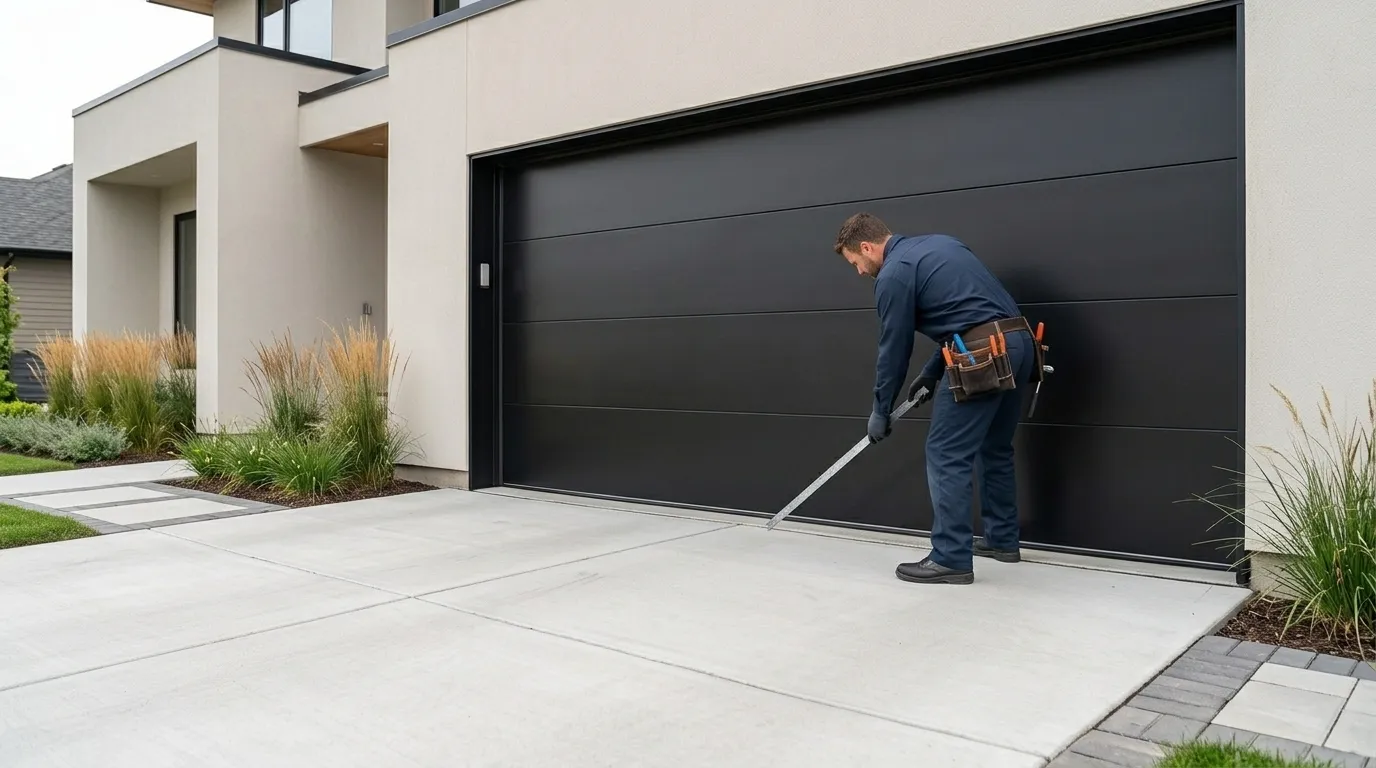
Most of Yorktown went up in 1967, and that's the number that matters before you touch anything in the garage. A door from that build year runs on a single torsion spring mounted over the opening - not the twin springs or extension-spring setup you'll find in newer subdivisions. If you're used to internet advice written for a different kind of door, it may not apply to yours.
You can safely check the obvious things yourself: tighten loose hinge bolts, spray the rollers, look at the bottom seal for cracking. What you should not touch is the spring itself. A torsion spring wound under this kind of tension, on hardware that's been in place since 1967, has had five decades to fatigue in ways you can't see from the outside. We don't recommend homeowners take that part apart, full stop - that's not local pride talking, that's just how the part works.
The complaint we hear most from this stretch of Yorktown is a door that's gotten loud and heavy to lift by hand, sometimes with a hard catch a few inches off the floor. That's the signature of a torsion spring losing tension after years of cycling - normal wear for hardware that's been doing the job since a house built in 1967 first got its door hung. On some of these original setups the spring was never rated for the cycle count a door sees over fifty-plus years, so by the time it fails, it's often failed the way old springs fail: quietly, in stages, not all at once.
A second, less common symptom on this vintage of house is a track that's pulled slightly out of alignment where the original brackets have loosened in the framing over time. Both point back to hardware nobody's touched since it went in.
We run this job out of Newport News, about 11 miles from Yorktown, so we're not sitting on a truck around the corner the way a shop based in town would be. With only 98 households in this pocket of Yorktown, we're not out here every week the way we are in bigger sections of the coverage map, which is part of why we don't advertise a fixed response window for Yorktown calls - the honest answer depends on the route that day and what's already on the schedule ahead of it.
What we can say is that once a truck is on site, most spring and opener repairs on a door this age are a same-visit job - the parts involved are common enough that a second trip usually isn't needed. Full door and track replacements sometimes run longer if the opening needs work beyond the door itself.
A door hung in 1967 was almost certainly a single-panel or early sectional design, and the torsion spring, drum, and cable sizes from that era aren't always what's sold as standard stock today. We carry springs and rollers sized for the common openings across the wider service area, which covers most of what shows up on this vintage of house, but every so often a bracket or drum on original hardware this old is a size that has to be special-ordered rather than pulled off the truck.
That's the honest limitation: we can fix the spring and cable on the spot most days, but if the track or the header bracket itself is the original 1967 piece and it's bent or corroded past saving, matching it exactly can take an extra day rather than a same-visit fix.
This part of Virginia sits in a cold-moderate climate band, and that matters for hardware that's been outside since 1967 - steady humidity and winter freeze-thaw cycles are what eat at unprotected torsion springs and lag bolts over decades, more than any single storm does. On a door this old, corrosion on the spring coil or the track bolts is common even when the door still looks fine from the driveway.
The other complication is structural, not mechanical: houses from this build year sometimes have garage framing that's settled slightly over fifty-plus years, which throws the track out of square in ways a newer house wouldn't show yet. That's not something we can diagnose over the phone - it usually takes seeing the opening in person to know whether the fix is a bracket adjustment or something bigger involving the frame itself.
We don't quote a flat number for Yorktown calls, because a spring swap on original 1967 hardware and a full door replacement are two different jobs with two different bills. What we can tell you is the context: household income across the broader service area runs a median of $82,589, and that's the range most of our repair and replacement pricing is built around - not luxury-tier doors, not the cheapest steel on the market either.
If your door is original to a 1967 build and the spring or track hardware has never been swapped, expect the estimate to lean toward replacement parts rather than a patch job, simply because matching fifty-year-old hardware exactly is rarely cheaper than putting in a new torsion system built to current spring-cycle ratings.
If your Yorktown home was built around 1967 like most in this area, and nobody's mentioned a door replacement, there's a good chance the spring and track hardware are original - that's five decades on the same torsion spring, so wear is normal, not a sign anything was done wrong.
We run out of Newport News, about 11 miles from Yorktown. We don't keep a truck stationed in town, so we build the route around what's already on the schedule that day rather than promising a fixed arrival window.
We carry spring, roller, and cable sizes common across the wider service area, which covers most 1960s-70s hardware. Occasionally a bracket or drum on a genuinely original setup is a size we have to order in, usually adding a day to the job.
On a door this age, that's almost always a torsion spring losing tension after years of cycling. It rarely fails all at once - more often it goes quietly, in stages, until lifting by hand gets noticeably harder over a few weeks.
Call now or request a free quote - same-day service on most repairs, upfront written pricing.
