Newport News, VA · Garage Door Service
Torsion springs and openers on Newport News homes built 1948-1992 wear out early in our cold winters. We replace broken springs, cables, and openers, same day when parts are on the truck.
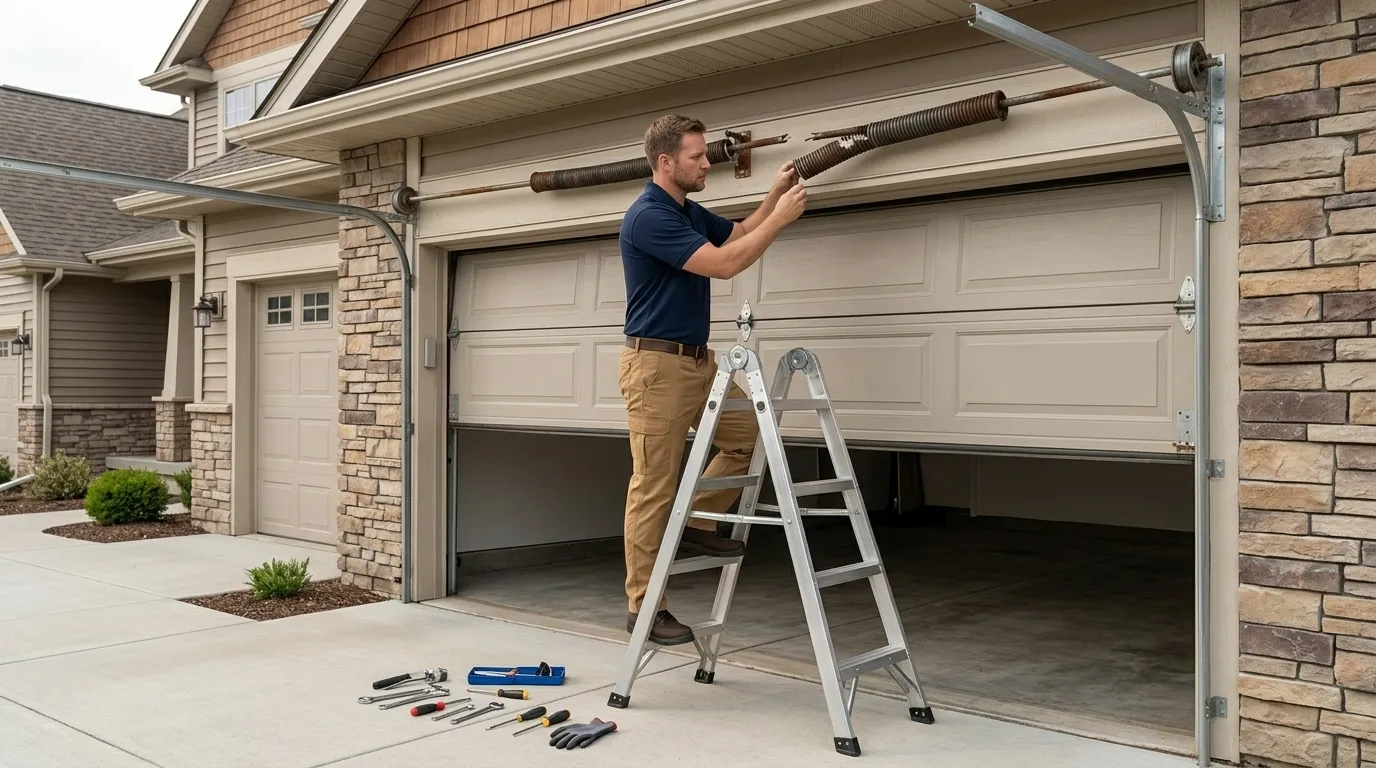
A torsion spring repair means winding down and pulling the old spring off the shaft, checking the cable drums and bearing plates for wear, and setting a new spring matched to your door's weight and wind count. On a double door that's usually a pair of springs, not one, because a single spring will overload trying to do the job of two. We also check the cables while we're up there - a cable that's frayed from riding a tired spring is the next thing to snap. Most of the torsion hardware on doors built in the 1960s and 70s uses shaft and drum sizes that are still common, so the job is usually a straight swap off the truck. Where it gets slower is odd-diameter shafts or older drum styles from houses at the early end of that 1948-1992 build range - those sometimes need a spring ordered to match, not grabbed off the shelf. We don't force a modern spring onto old hardware it wasn't sized for; that's a way to strip a bearing plate or worse, and it's not worth the shortcut.
The door won't budge, or it starts up and slams back down before it clears a foot off the floor. Sometimes you hear it first - a loud bang from the garage, usually mid-morning or evening when the temperature's shifted, and after that the door either won't lift at all or lifts crooked, heavier on one side than the other. If only one spring on a double door has gone, you'll see the door hang tilted when it's partway up, since the good spring is doing all the lifting on its own. A cable that's jumped its drum looks different - the door binds in the track, or one side drops while the other holds, and the opener strains and reverses instead of finishing the cycle. Either way, don't keep hitting the wall button. Running an opener against a broken spring or a jumped cable is what turns a spring job into a track and panel job.
For a standard torsion spring size, replacement is usually a same-day call - we carry the common sizes on the truck because so much of the housing stock across the service area dates from the same 1960s-70s window and uses the same handful of shaft and drum diameters. Where it takes longer is the less common sizes, mostly on the older end of the 1948-1992 build range, where the original hardware doesn't match anything current and a spring has to be ordered to the right wind and wire gauge. That can mean a day or two without the door instead of a few hours, and we'll tell you straight if that's the case rather than force-fitting something close. We'd rather you wait a day for the right part than have a spring under-rated for your door fail again in six months.
Torsion springs are rated for a set number of open-close cycles, and steel fatigues faster in a cold-moderate climate where the metal is contracting and expanding through winter swings all season. That's the climate this area sits in, and it's the main reason a spring rated for a certain lifespan on paper doesn't always make it that far here. Layer that onto the age of the housing - median build year across the area is 1977, with most of the stock going up between 1948 and 1992 - and you've got a lot of original torsion hardware that's simply outlived its wind count. Whether you're a mile southeast in Hidenwood or four miles northeast toward Kiln Creek, the door on the garage is likely original to a house from that same 1960s-70s wave, carrying a spring nobody's touched since it was installed. With 24,011 owner-occupied houses across the service area sitting in that build window, this isn't a rare call - it's the most common reason the phone rings.
If the opener motor runs but the door won't lift, or it lifts a few inches and reverses, that's almost always the spring, not the opener. A dead opener usually stays silent or the light blinks with no motor sound at all. A broken spring often comes with a loud bang you heard earlier in the day - that's the spring letting go under tension.
You can, but we don't recommend it. Springs age together, and if one has already reached the end of its cycle life, the other is close behind. Replacing both at once means one visit instead of two, and it keeps the lift balanced on both sides instead of one worn spring dragging on a fresh one.
For most of the service area, yes - the common shaft and drum sizes from the 1960s-70s building wave are standard stock. Less common sizes, usually from the older end of the 1948-1992 range, sometimes need to be ordered, which can add a day or two to the job.
A torsion spring itself isn't something you patch - it's either good or it's done. What's worth weighing is whether the rest of the door (track, rollers, panels) is worth the spring investment, or whether the door's age means a full opener or door replacement makes more sense. We'll give you that read honestly when we're there.
Call now or request a free quote - same-day service on most repairs, upfront written pricing.
